Selecting and choosing your first camera is a big moment for anyone and can be quite intimidating.
The first camera you get doesn’t have to be the most advanced or costly one out there.
The most important thing is finding a camera that is most compatible with your needs.
You must buy a camera that works best with your budget, goals, and the kind of content you want to create.
You can find help in this article to determine the camera that suits you best and is within your budget.
Understanding Your Photography Needs Before Buying A Camera
Before you get yourself a new camera, it’s pretty important to know what you need and if you’ve already picked any model then why you need that specific one.
Don’t overthink for now, I’ve got you covered.
Here’s a list of personal things you need to understand before you buy a new camera.
Define Your Photography Goals (What Will You Shoot?)
The first step before buying a camera is to understand and make a decision on what you actually want to do with your first camera.
To get to the camera you want and need, first, you need to define the goals that you want to work towards.
If you want to go ahead with travel photography, then you need a camera that is lightweight, easy to carry, and has a good battery life.
The ones who want to pursue portrait photography need cameras that have great lens options and great bokeh capability.
For street photography, you need compact and discreet cameras.
If you are aspiring to be a vlogger or a filmmaker, then you need to look at the cameras that have 4K videos, smooth autofocus, and a flip screen.
Set a Realistic Budget for Your First Camera in India
Now, once you have made your goals clear, the next step is to set a budget.
In India, you can see that the Entry-level DSLRs are available and starting from Rs. 25000, making it perfect for both beginners and hobbyists.
The camera you choose also depends on your budget.
For Rs. 50000 or Rs. 75000, you can get advanced DSLRs and mirrorless options that are known for a sharper image.
Don’t take too much pressure, your first camera doesn’t have to be perfect.
It just needs to fit with your needs, and as you work more with experience, you will see what works best for you.
Still Confused? Check out our latest guide on Photography Equipment Checklist for Beginners: From ₹30K To ₹1.5L to find the equipment that suits your budget.
Camera Types Explained: Which is Best for Beginners?
There are plenty of diffrent types of cameras that exist, you need to pick one that suits your style or need.
Mirrorless vs DSLR vs Compact
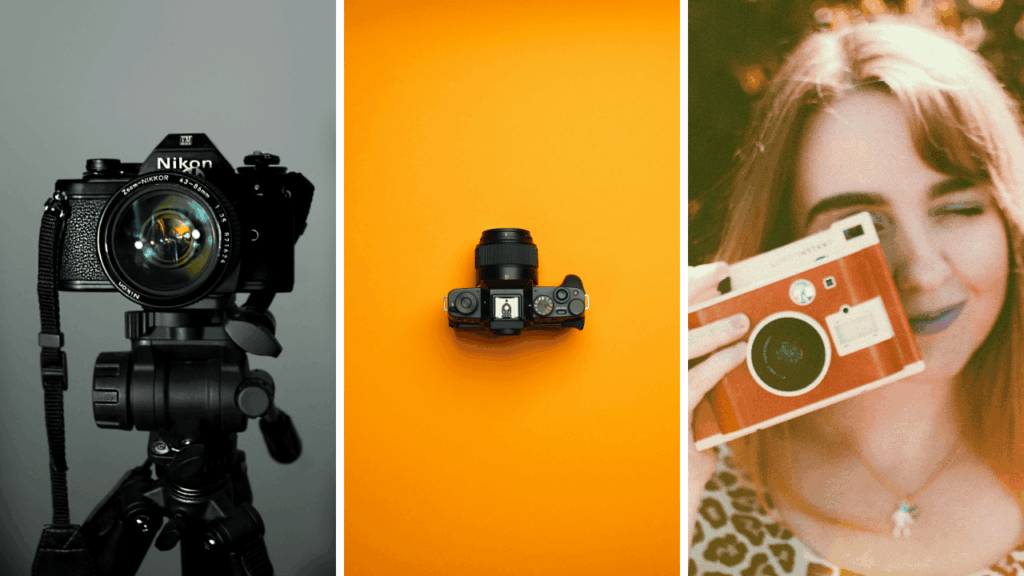
After you have decided on what goal you want to pursue and what your budget is, the next step is to decide what style of camera you want.
Now there are three options available: Mirrorless or DSLR, or Compact.
Mirrorless cameras have gained a lot of popularity for being lighter, faster, and having more modern features.
These cameras have an electronic viewfinder that allows you to see exactly how your shot will look beforehand.
The autofocus in the mirrorless cameras is also a lot faster than the traditional DSLR, and makes it a better choice for travel photography, street photography, etc.
Now, about DSLRs, they are the best choice for beginners as they have a longer battery life and have a sturdy build, and a comfortable grip.
DSLRs also have an affordable starter kit and an optical viewfinder.
DSLRs can be perfect for a first-time buyer.
Now, the compact cameras work best if your main concern is portability, as they are easy to carry around in a bag.
Camera Sensor Size Explained (And Why It Matters?)

After the body style, another important thing you need to look for in a camera is the sensor size.
The sensor size decides how much light and detail your camera can get and capture.
Now there are also different types of sensors, the first one being APS-C sensors.
The APS-C sensors are the most common in the entry and mid-level models.
They offer the perfect package, including a good balance of image quality, portability, and cost.
These sensors are best for beginners and hobbyists as well.
Another is a Full-Frame sensor; now these are larger and capture more detail.
These are known for capturing brilliantly in low light and also for bokeh.
This sensor is mostly present in the higher-end models and is required by professionals more.
Lastly, there is the Micro Four Thirds Sensor.
This sensor is small, and hence the cameras are lighter and compact.
These sensors do not offer the same depth of field control as a full-frame sensor, but they work well for travel photographers.
In short, it can be said that the bigger sensor allows better quality and depth, and the smaller ones get points for size and affordability.
Key Camera Features Every Beginner Should Prioritize
While buying your first camera, instead of paying attention to the numbers in the description, you should look at the features.
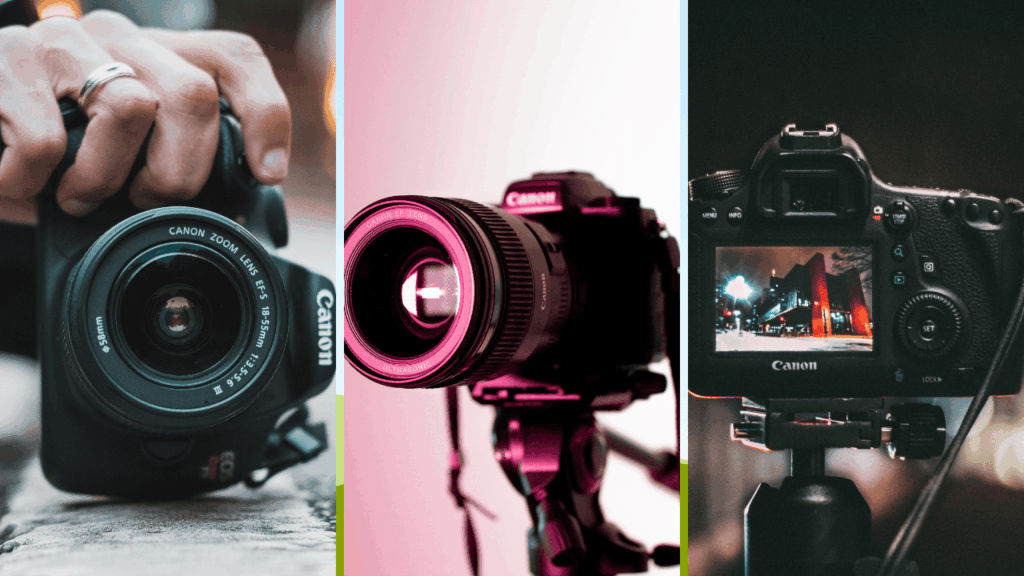
Your main focus should be on how your camera performs in everyday situations and the features that work for that.
Some of the key features you need to prioritise are mentioned below.
Understanding Lens Ecosystem and Compatibility
A Camera is just the start.
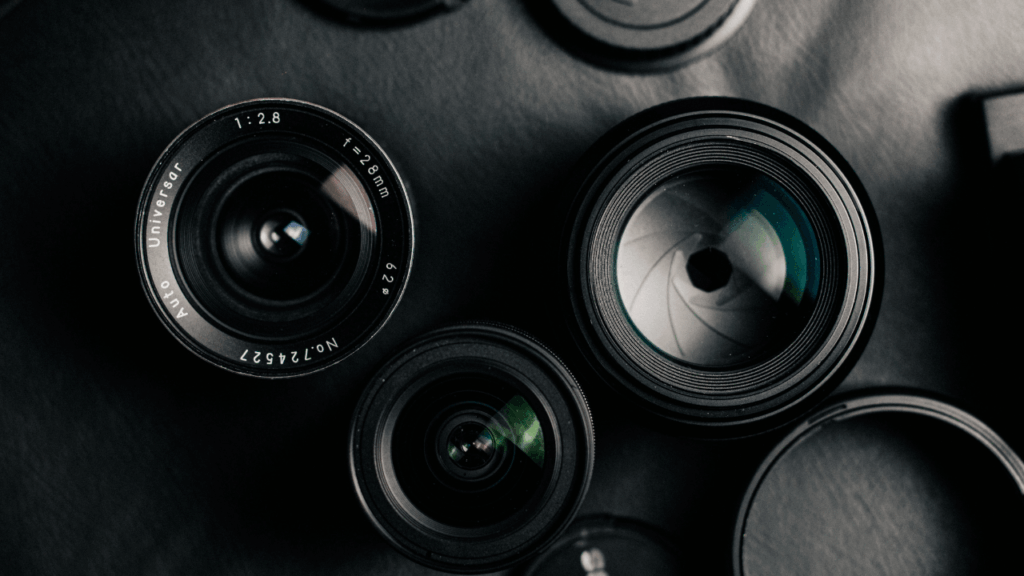
As you go forward, to gain flexibility and variety in your work, you are going to need various lenses.
A wide lens ecosystem gives you more freedom to experiment and gives you an option.
Most cameras come with a basic and standard kit lens, which can allow you to learn the basics as a beginner.
After you are comfortable with the basic lens and as you gain more experience and choose your niche, you can go ahead and expand your lens collection.
You can later invest in lenses that are specialised according to your preferred niche and those that are compatible with your system.
Not sure which lens works for you? Check out our latest guide on How to Choose the Best Camera Lens: Types with Examples [2026].
Autofocus Performance: Speed vs Accuracy
Autofocus is also an important feature if you want sharp shots of moving subjects.
If you mostly shoot still subjects, then any camera is okay for you.
But if you capture more dynamic shots like you are a travel photographer, then the autofocus speed and accuracy are important.
Nowadays, as the technology progresses, there are mirrorless cameras available that offer eye and face detection.
These detection features lock on the subject and keep the image sharp even while moving.
For checking autofocus, you can pay attention to how quickly it locks focus and tracks the object consistently or not.
DSLRs also offer autofocus with the help of their optical viewfinder.
Image Stabilization (IBIS) vs Lens Stabilization
Sometimes you will notice that your shaky hands can ruin a perfectly great shot.
For this same reason, Image stabilisation is an important feature to look for in your camera.
This feature can avoid changes due to the small movements and give sharper results even in low light conditions.
This feature can prove to be extremely beneficial as it can reduce shaky videos or blurred pictures while travelling or while filming without a tripod.
Almost all the newer models in the market offer strong stabilisation.
If your camera lacks IBIS the make sure at least your lenses have optical stabilisation.
Video Capabilities: Do You Need 4K?
Video is just as important as photographs for a creator.
The most basic need is that the camera records in full HD, i.e., 1080p, smoothly.
If your budget allows, you can also spring for the 4K video quality as well.
In addition to the quality, you should also pay attention to the frame rates.
A 30 fps can work well for everyday needs, but a 60 fps is great for smooth action and slow motion.
Some cameras even have the feature to record vertically, which can be perfect for Instagram or other social media content.
Ergonomics, Build & Usability
You also need to pay attention to ergonomics, or the ease of use of your camera.
This includes checking the screen.
A fully articulating screen works best for vlogging and selfies, on the other hand, the tilting screen is great for low or high-angle shots.
Touch screen and an easy interference, i.e., the menu can make the navigation for a beginner easy.
Viewfinder is also important in this; an optical one, like in a DSLR, can feel more natural.
But the electronic one present in the mirrorless cameras can let you preview how your image is going to look.
Also, consider the weight and portability of your camera.
Smart Camera Buying Tips for Indian Photographers
After considering everything and shortlisting your choice, you need to plan, and some tips might help save money in the long run.
Should You Rent Before Buying Your First Camera?
If you are uncertain about the camera you want, consider renting the gear before making a purchase.
By renting the camera or any equipment, you can see how it feels to use it in daily life.
This will make your decision a whole lot easier if you should buy the camera or not.
You can see how the camera feels if you travel, walking normally, etc.
Before making a big investment, you should at least see if the camera suits you; it’s better to test than to regret later.
Essential Camera Accessories Checklist for Beginners
A camera alone isn’t enough to get started, you need a few accessories as well to get started.
A fast SD card is one of the most basic accessories, it keeps you shooting smoothly and makes sure that there is no lag in your camera while saving videos and photos.
Another important accessory is a spare battery, which can ensure that you don’t run out of power in the middle of work.
A microfiber cloth or an air blower can help you maintain your lens and keep it dust-free, which can be a challenge in Indian cities.
A strap for your camera can add safety as well as convenience for your camera, just like a sturdy tripod helps maintain stability while shooting.
Checkout our latest guide on Complete Photography Setup Guide for Beginners in India 2026. It covered every single detail that you needs to know before you start photography.
Where to Buy Cameras in India: Compare Prices Wisely
In India, the prices can be different online and in the local shops, so before buying your camera, you need to research a bit, where you can get the best price.
There are festivals or seasonal discounts on online shopping sites such as Amazon and Flipkart.
Along with great deals, sometimes you can even get freebies such as bags, filters, or an extended warranty.
You should also check for the official warranty coverage.
First Camera FAQs: Beginner Questions Answered
Some of the most frequently asked questions about buying your first camera are answered below.
Which is more important, the camera body or the lens?
We can say the lens is more important, as a good lens can make a bigger difference in your work.
But that fits correctly if you got a better camera body, like for example, currently I’m using a Sony A6000 Mirrorless camera.
And that camera generates a pretty sharp image with the Sigma 56MM Prime lens.
Hence, it is important to choose a system with a strong lens ecosystem.
What should my budget be for my first camera?
As a beginner, a budget of Rs. 30,000 – Rs. 55,000 should be enough to get an entry-level DSLR or a mirrorless camera with a kit lens.
If you can stretch your budget to Rs. 60,000- Rs. 75,000, you can get a more professional camera with more high-tech features.
Should megapixels matter more?
Not that much, other features like the lens quality, sensor size, and stabilisation matter more compared to the megapixels alone.
But at the end, if you upgrade your camera for better megapixels, then you’ll get better quality and sensor size, so all are connected.
Not able to afford a full frame camera worth lakhs? Checkout our quick guide on Best Camera Phones for Photography in India 2026.
Start Your Photography Journey: Take Action Today
Your first camera doesn’t have to be “perfect,” but more importantly has to be the right fit for you, so you can start your journey comfortably.
Check out our latest guide on the Best camera under 50000 INR to buy from Amazon, if you’re confused about picking the best one.
As mentioned in the article above, you need to choose what you will use the camera for, then go on and shortlist the cameras that fit the budget and include the features you need the most.
Pay more attention to the lens options, ergonomics, real-world performance, etc, rather than on megapixels.
Check out our latest guide on Best Photography Lenses To Buy for Beginners in India 2026: Under 20k INR
Also, test how the camera feels in your hand and how comfortable you are working with it in your daily life, as comfort and ease of use are also important.
Pick a system that allows you to add more lenses to your kit, so that your camera grows as you grow with time and experience.
To conclude, you can say that if your camera is comfortable, reliable, and allows you room to grow, then it is the right choice for your first camera.
Read more
- AI vs Traditional Photography | The Complete Guide [2026]
- Camera vs Smartphone Photography: Buyer’s Guide for India 2026
- Must-Read Photography Books 2026 for Every Skill Level
- 7 Best Cameras Under ₹50000 in India | Top Picks Of 2026
- YouTube Camera Buying Guide 2026: Best Affordable Cameras (India)
- TOP 5 Creative Indian Photographers To Follow On Instagram In 2026
- Ways To Earn Money From YouTube In India | Under 6 Months*
- Indian Stock Photography Sites | Sell Mobile Photos Online In 2026
