Monsoon is one of the most exciting seasons for photography in India. The rain brings dramatic skies, vibrant greenery, foggy mornings, and reflective streets that can turn ordinary scenes into unforgettable frames.
But while the monsoon creates beautiful photo opportunities, it also brings serious risks for your camera gear.
High humidity, sudden showers, condensation, and fungal growth can damage lenses, sensors, batteries, and electrical contacts if you are not careful.
This is especially important for photographers in Indian cities such as Mumbai, Chennai, Kolkata, Kochi, Surat, and Ahmedabad, where humidity can rise sharply during the rainy season.
With the right precautions, you can keep shooting safely without risking expensive repairs.
In this guide, you will learn how monsoon weather affects your camera, what problems to watch out for, and the best ways to protect your equipment before, during, and after a shoot.
Why Monsoon Weather Is Dangerous for Camera Gear
At first glance, monsoon may seem like a photographer’s dream because of the soft light and rich colours.
However, the same moisture that makes the season so photogenic can also damage your equipment in several ways.
Camera gear is built to handle daily use, but it is not designed to sit in humid air for long periods or get soaked in rain.
Even if you do not shoot in heavy rain, the moisture in the atmosphere alone can slowly affect the internal parts of your camera and lenses.
- High humidity can encourage fungal growth inside lenses.
- Water exposure can damage internal circuits and sensors.
- Condensation can form when you move between AC rooms and humid outdoor spaces.
- Salt-laden air in coastal cities can speed up corrosion.
How Moisture Affects Camera Equipment
Moisture is one of the biggest threats to camera gear during the monsoon season.
Even when it does not come in the form of direct rain, high humidity alone can slowly affect lenses, camera bodies, and internal components over time.
Among all moisture-related problems, fungal growth is one of the most common and damaging issues for photographers in India.
Once fungus starts developing inside a lens, it can spread quietly and cause long-term harm if not detected early.
Fungal Growth on Camera Lenses
One of the biggest monsoon-related problems for photographers in India is fungus inside lenses.

Fungal spores are present in the air all year, but they grow quickly when humidity rises above 70 percent.
In coastal cities like Mumbai, Chennai, and Kochi, humidity can remain very high for long periods during the rainy season. If your lens is stored in a damp environment, fungus may begin to grow on internal glass elements.
At first, it may look like a faint haze, cloudy marks, or thin web-like patterns. In many cases, the damage is not visible until it has already spread. Once fungus starts affecting lens coatings or glass surfaces, repair can become expensive.
In India, lens fungus cleaning can cost anywhere from ₹3,000 to ₹15,000, depending on the lens and the extent of damage.
Moisture Inside the Camera Body
Even weather-sealed cameras are not fully waterproof. They are only designed to resist light splashes and limited exposure, not heavy rain or prolonged wet conditions.
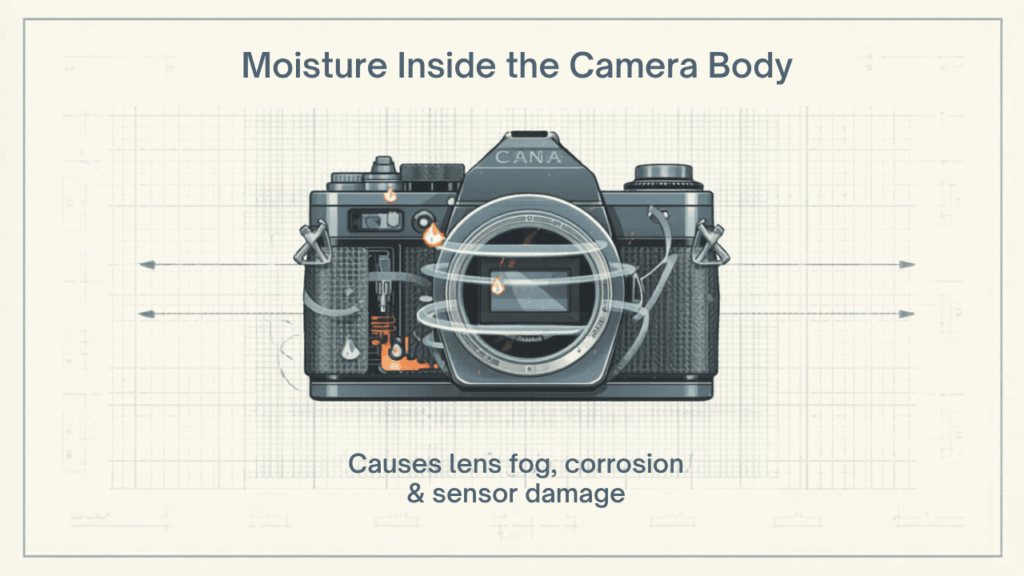
Moisture can enter through battery doors, card slots, lens mounts, or other small gaps.
Once inside, it may cause condensation on the sensor, fogging in the viewfinder, or even damage to the circuit board.
Entry-level DSLRs and mirrorless cameras without proper sealing are especially vulnerable.
If you are using an affordable camera for travel or street photography, extra protection is essential during the monsoon.
Corrosion of Metal Contacts
Humidity can slowly corrode metal components such as battery terminals, lens contacts, and hot shoe connectors.
This may cause autofocus errors, battery recognition problems, flash issues, or unstable communication between the camera body and lens.
In coastal regions, salt in the air makes this worse. If you are shooting near the sea or in a humid city, your gear needs more frequent inspection and cleaning.
Condensation from Temperature Changes
Condensation is another common monsoon problem in India. It happens when your camera moves from a cool, air-conditioned room into warm, humid outdoor air, or vice versa.
That sudden change in temperature causes moisture to collect on the surface and sometimes inside the equipment.
If this happens repeatedly, the trapped moisture can lead to long-term damage and fungus growth.
You can go through one of my favourite documentaries on how the camera works in hot weather.
Before the Shoot: Prepare Your Gear
Good preparation is the best way to protect your camera during the monsoon.
A few simple habits before you step out can save your equipment from expensive damage later.
Store Equipment in a Dry Box
A dry cabinet is ideal, but it is not always necessary for every photographer.
A large airtight plastic container with silica gel packs can also work very well for short-term storage.
If you want a budget-friendly setup in India, use a sturdy plastic box, add three to four silica gel packets, and place a hygrometer inside to track humidity levels.
The ideal humidity range for preventing fungal growth is around 40 to 45 percent relative humidity.
Check Your Camera and Lenses
Before leaving for a shoot, inspect your gear under a bright light. Look for fungus, dust, haze, or corrosion on the lens contacts and battery terminals.
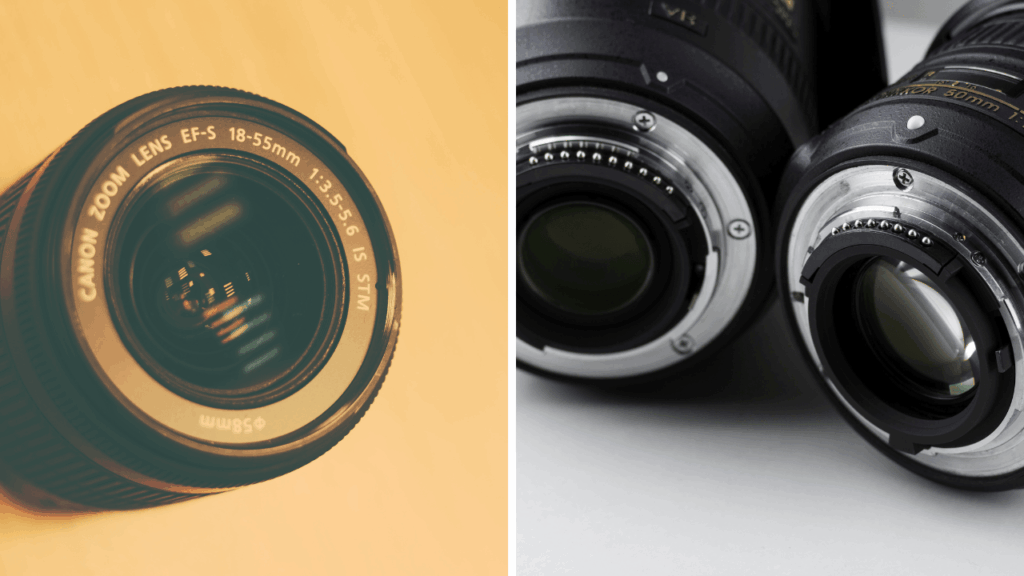
Clean the outer surfaces with a dry microfiber cloth. If you spot anything unusual inside the lens, avoid using harsh cleaning methods at home and get it checked by a professional service center.
Pack Monsoon Essentials
Make sure your camera bag has a few basic protective items before the rainy season begins.
- Rain cover or waterproof sleeve.
- Microfiber cleaning cloth.
- Silica gel packets.
- Ziplock bags for emergency protection.
- Optional: a small blower for removing dust and moisture.
During the Shoot: Reduce Moisture Exposure
Once you are outdoors, the main goal is to limit how much moisture reaches your equipment. Even a short shoot in drizzle or mist can create problems if you are careless.
Use a Rain Cover
A rain cover is one of the simplest and most useful accessories for monsoon photography.
It helps protect your camera from drizzle, sudden showers, and splashback while still allowing you to keep shooting.
If you do not have a proper rain sleeve, a ziplock bag can be used as a temporary emergency shield.
However, it is better to invest in a proper waterproof cover if you shoot outdoors often.
Avoid Lens Changes Outdoors
Changing lenses in humid or rainy conditions allows moisture and dust to enter the camera body. It also increases the chance of wetting the sensor area.
If you must change a lens, do it under shelter and keep the process quick. Prepare the replacement lens in advance so you can switch without unnecessary exposure.
Keep Wiping the Gear
Use a clean microfiber cloth to wipe off water droplets from the body, lens barrel, and strap.
Pay attention to areas where moisture can collect, such as buttons, the lens mount, and the battery compartment.
Do not blow on the lens or camera with your mouth, because that adds more moisture. A rocket blower is a much safer option for removing dust or tiny water particles.
After the Shoot: Dry and Store Properly
What you do after the shoot is just as important as what you do before it. If you store damp equipment too quickly, you may trap moisture inside the camera bag or storage box.
Let the Gear Adjust
After returning indoors, do not pack your camera away immediately. Let it rest at room temperature for about 30 minutes so it can adjust gradually.
This helps prevent condensation from forming inside the equipment. It is one of the most overlooked steps in monsoon camera care.
Store It in a Dry Environment
Once the gear is dry, place it back in a dry box or airtight container with fresh silica gel. This helps maintain a safe storage environment even during long stretches of rain.
If you live in a humid city, keeping your camera in a room with controlled humidity can make a big difference over time.
Inspect Your Lenses Weekly
Use a phone torch or bright lamp to check for early signs of fungus on the lens. Look for cloudy patches, haze, or web-like marks inside the glass.
Early detection matters because fungus spreads slowly but steadily. If caught early, the damage is easier to manage and often cheaper to fix.
Recharge or Replace Silica Gel
Silica gel absorbs moisture until it becomes saturated. If you use colour-indicating silica gel packs, check them regularly and replace or reactivate them when needed.
You can usually reactivate silica gel by heating it in an oven at around 120°C for one to two hours. If the packets are old or damaged, replacing them is the safer option.
Budget-Friendly Camera Protection for Indian Photographers
You do not need expensive equipment to protect your camera in the monsoon. A simple and practical setup can work very well for most Indian photographers.
For example, a large airtight plastic container, a few silica gel packets, and a basic hygrometer can provide strong protection at a low cost. This setup is ideal for students, hobbyists, and content creators who want reliable protection without spending too much.
- Airtight box setup: around ₹800-₹1,200.
- Silica gel packets: affordable and widely available in India.
- Rain cover: a useful one-time purchase for outdoor shoots.
- Hygrometer: helpful for tracking humidity at home or in storage.
Compared to the cost of lens repair or sensor cleaning, these small investments are well worth it.
Monsoon Camera Care Tips for Indian Cities
Different regions in India face different monsoon challenges.
In coastal cities like Mumbai, Chennai, and Kochi, salt and humidity can be a serious issue. In cities like Kolkata and Surat, moisture and sudden rain can affect storage and daily use.
If you live in Ahmedabad, Pune, Bengaluru, or Hyderabad, you may not face the same sea salt corrosion, but humidity and sudden weather changes can still create problems for camera gear.
The safest approach is to treat every monsoon shoot as a high-risk shoot.
- Keep gear away from damp walls and closed, unventilated cupboards.
- Do not leave your camera in a car during the rainy season.
- Check your lens for fungus even if you have not used it recently.
- Always dry your bag, strap, and cloths after a wet shoot.
Frequently Asked Questions
Here are some common questions photographers ask about protecting camera gear during the monsoon.
These quick answers will help you understand the risks, prevent damage, and keep your equipment safe in humid weather.
What happens if moisture gets inside a camera?
Moisture can cause temporary fogging, sensor issues, and in severe cases, internal circuit damage. If it is not handled properly, it can also lead to fungal growth over time.
Is weather sealing enough during heavy rain?
No. Weather sealing helps with light splashes and brief exposure, but it does not make a camera fully waterproof. A rain cover is still important during heavy rain.
How can I spot fungus on a lens?
Use a torch or bright lamp and look for cloudy spots, web-like lines, or hazy patches inside the lens. If you notice these signs, get the lens checked by a professional.
Can silica gel really protect camera gear?
Yes. Silica gel helps absorb excess moisture from your storage container or camera bag. It is one of the most affordable ways to reduce humidity-related damage.
Final Thoughts
Monsoon photography can be beautiful, creative, and rewarding, but only if your gear is properly protected. The combination of rain, humidity, and sudden temperature changes makes this season one of the riskiest times for cameras in India.
By using a rain cover, storing your gear in a dry box, checking for fungus regularly, and keeping silica gel in your bag, you can reduce the chance of expensive damage.
With the right care, you can enjoy the monsoon season and capture stunning Indian landscapes without putting your camera at risk.
